
Jose Rizal: The First Name in Philippine History
- museomaritimo

- Jun 19
- 11 min read

June 19, 2026 – Pasig City, NCR, Philippines
An article by SM Floralde
From way back in high school days, one name has stuck in my mind—Jose Rizal. He was the author of two anti-Spanish-government novels and the most recognized national hero of our beloved country, which he poetically called Perla del mar de oriente in Spanish (translated as Perlas ng dagat sa dakong silangan in Tagalog and Pearl of the orient sea in English). Aside from his birthdate (June 19, 1861), birthplace (Calamba, Laguna), and parents (Francisco Mercado and Teodora Alonso), I could remember his name easily because it was a short, four-syllabled name and had high recall quality. But in the context of 19th-century Spanish colonial civil and baptismal registries, his complete name was a different story. Unlike the modern standard of three names—first name, middle name, and surname—his registered legal name consisted of six!
As a young student then, I’d found it difficult to remember all the names, dates, and terms discussed in my Philippine history class, most especially his extraordinarily long name. But I had to because it’s mandatory to memorize them all. As a matter of fact, my teacher would repeatedly ask questions regarding his quite lengthy name, a combination of his given names, paternal and maternal names, and the maternal family lineage. Desperate to find a solution to my academic dilemma, I discovered a mnemonic technique to remember them. I applied this strategy in memorizing all the lists of names and terms, and surprisingly, it radically improved my school life. By taking all the initial letters of each of Rizal’s names and combining them to form a new word or acronym—JPRMAR (pronounced in Tagalog as jey-pi-ar-mar), I could remember and even recite his complete name perfectly—Jose Protasio Rizal Mercado y Alonso Realonda.
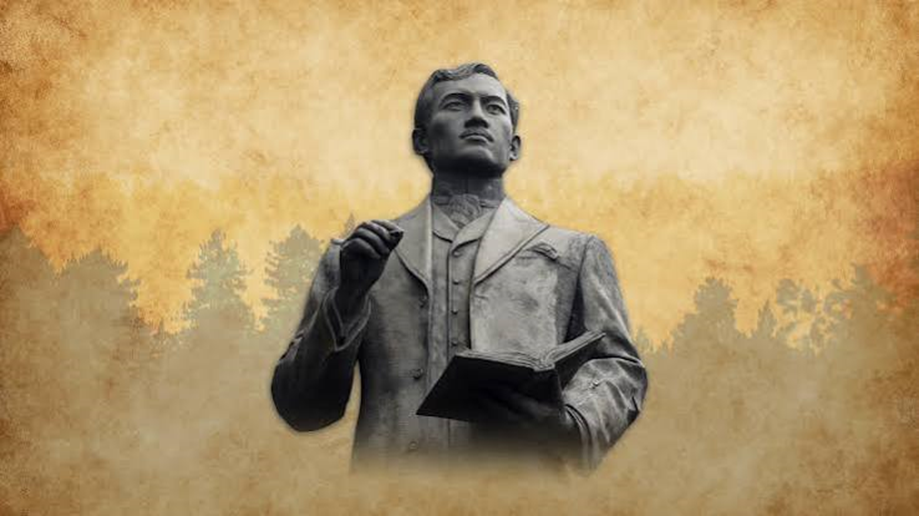
Rizal’s Race and Lengthy Name
When I was young, I thought Rizal was pure Filipino. But through reading history books and doing research, my curiosity led me to believe that he was born from a “mixture of races”. In other words, his vein “runs the blood of the blending of the East and West”. To explain it further, “On the paternal side, the Great- Great Grandparents of Jose Rizal, Domingo Lam-co and Ines dela Rosa are [sic] both Chinese merchant traders[,] while on the maternal side, the great – great grandparents [sic] were Eugenio Ursua, a Japanese[,] and Benigna, a Filipino. More so, the great grandparents [sic] and his grandparents[,] both from [the] paternal and maternal side[s,] has [sic] a mixture of races of Spanish-Filipino and Filipino- Chinese- Japanese [sic]. Therefore, Rizal inherited the following traits from his ancestors[,] such as the sense of frugality and industriousness (Chinese); self- determination [sic] and courage (Malay); open competition and decision- making [sic] (Japanese); and sensitivity and self-esteem (Spanish). These hereditary traits could be traced in the entire life of Rizal.” Therefore, his bloodlines clearly show how he came from a deeply diverse, mixed-race heritage.
In terms of civil registry, Rizal’s full baptismal name reflects a combination of his rich ancestral heritage, Spanish colonial naming customs, and additional family surnames. As required by the naming regulations of the Clavería decree of 1849, all Filipinos must register their complete names, which included Jose Rizal.
Even by present-day standards, the length of his name is still considered extraordinary. But there were valid reasons for how he got to register such an extensive name. To better understand the etymology of Rizal’s name, let’s break it down into specific elements:
José: As chosen by his deeply religious mother, his first given name was conceived in honour of Saint Joseph (in Tagalog, San Jose), known in the Scripture as the earthly father of Jesus Christ. Since the Spanish colonial period up to the present time, the name “Jose” has been noted as extremely common in the Philippines.
Protasio: Another clever idea by his mother, his middle name was derived from San Protacio (Saint Protasius), the patron saint of Milan, Italy. From this early Christian martyr, venerated in both the Catholic Church and the Eastern Orthodox Church, Rizal’s second given name was derived. Incidentally, this saint’s feast day falls on June 19th, which was Jose Rizal’s exact birthday.
Rizal: To replace "Mercado", a new surname was introduced to the young hero from Calamba. Originally chosen by his father, Francisco, he preferred “Rizal” from the Spanish word “ricial”, meaning "green fields" or “pasture”, as his main surname. Tragically and prophetically, the 35-year-old martyr would fall and die by firing squad on the grassy, dewey ground at Bagumbayan, also known as Luneta, and presently named Rizal Park.
Mercado: This surname is a Spanish and Portuguese word that literally translates to “market”. His paternal great-great-grandfather, a Chinese immigrant, adopted this surname. In later years, when he travelled to foreign countries, Rizal used “Jose Mercado” as a strategic travel alias to avoid detection by Spanish authorities.
Alonso: His mother’s full name was “Teodora Alonso Realonda”. To complete his full name, Rizal’s mother's surname was included. It is also a Spanish variation of “Alonzo”, which means "noble" and "ready for battle".
Realonda: His mother’s family had adopted the additional surname Realonda in 1849. Governor General Narciso Clavería y Zaldúa decreed the adoption of Spanish surnames among the Filipinos for census purposes. Thus, this maternal surname was added to complete Rizal’s legal name.

Rizal’s Nickname, Title, and Pseudonyms
In his short lifetime, Jose Rizal had used various names. Here are some of them:
Pepe: His family, including his mother, siblings, and brother, affectionately used the nickname Pepe when not being formal. It is a traditional Spanish nickname for the name José, which stems from the abbreviation of "pater putativus," which means “putative father.” Referring to Saint Joseph, the foster father of Jesus, it’s often abbreviated as P.P. in Latin. This abbreviation was pronounced as “Pe Pe,” which soon became his nickname, "Pepe."
Dr. Jose Rizal: The academic title, Doctor (Dr.), was added to his name, Jose Rizal, for earning formal medical degrees from top European universities. He earned a licentiate in medicine at the Universidad Central de Madrid, where he was also awarded the degree in philosophy and letters. He also completed his eye specialization course at the University of Heidelberg. Then, as a trained and practicing ophthalmologist, he went back to the Philippines with the aim of performing a groundbreaking cataract operation on his mother’s left eye.
Gat. Jose Rizal: "Gat" is a pre-colonial Tagalog honorific for a nobleman or a man of recognized greatness. It is an abbreviated word from “Gatdula,” meaning “lord” or “noble,” similar to the English "Sir" or the Spanish "Don." When applied to our national hero, Gat Jose Rizal, it serves as a reverent title to acknowledge his immense intellect, patriotism, and sacrifices for the country.
Laong Laan: Translated in English as "one who is always prepared" or "reserved for a long time," Jose Rizal commonly used Laong Laan for his articles in La Solidaridad. Reflecting his analytical, measured tone, he used this pen name primarily to protect his identity and avoid persecution from Spanish authorities while advocating for reforms.
Dimasalang: Meaning "untouchable" or "one who cannot be touched" in English, Jose Rizal often used this pseudonym to sign some of his other literary works and writings and for his contributions in Masonry. While metaphorically declaring that his patriotic writings and reformist ideals could not be stained, silenced, or compromised by the colonial regime, he used the pen name Dimasalang for his essays in the reformist newspaper La Solidaridad to evade Spanish colonial censorship and protect his identity.
Doctor Uliman: This amusing moniker was given to Rizal by the townspeople of Calamba. In the Tagalog-inflected speech of the locals, the Spanish term for German (Aleman) morphed into the nickname "Uliman." They called him by this name because of the common knowledge that he completed his course in ophthalmology at a distinguished university in Germany.
From some references, Rizal also used other names such as P. Jacinto, Agno, and Calambeño to hide his identity when writing his autobiography, to refer to Agno River for his reflective writings, and to proudly honor his birthplace and hometown of Calamba, Laguna.

National Places Named after Rizal
Since his untimely demise, countless locations in the country and around the world have been named after Dr. José Rizal. There are now exactly 1 province and 7 municipalities named after him in the Philippines, alongside thousands of major roads, public squares, schools, and parks globally. With the sheer volume of his namesake’s makes, it is impossible to give an exact total, but they are broadly categorized into official jurisdictions, parks, and international monuments.
As of this date, there is only one province named after Jose Rizal. Located in the CALABARZON region and just 16 kilometers east of Metro Manila, Rizal is a highly urbanized and economically progressive province. Its capital is Antipolo, where his father and the seven-year-old Jose Rizal traveled to the Antipolo shrine and saw the Virgin of Antipolo. However, there are seven municipalities spread across the country, including towns in Cagayan, Kalinga, Laguna, Nueva Ecija, Occidental Mindoro, Palawan, and Zamboanga del Norte.
Aside from official jurisdictions and landmarks, nearly every town and city in the Philippines features a Plaza Rizal or Rizal Park as its central public square. The most famous is the Rizal Park in Manila, where the execution of Jose Rizal took place. It is also recognized as one of the largest urban parks in the country. Other parks named after him are located in the cities of Davao, Bacolod, Danao, and Zamboanga. Moreover, there is a protected area in Dapitan City known as the Jose Rizal Memorial Protected Landscape (Rizal Park and Shrine), where Rizal was exiled from 1892 to 1896.

Notable Global Places and Institutions
Rizal truly embodied the definition of a global citizen. He traveled to many countries and somehow left a footprint wherever he went. It is not surprising that his legacy extends to numerous countries he visited, lived in, or where Filipino communities thrive. Some prominent international locations include Place José-Rizal in Paris, France; José-Rizal-Straße in Wilhelmsfeld, Germany (where he once stayed); Dr. José Rizal Park in Seattle, Washington (USA); Rizal Park in Sydney, Australia; and Jalan Jose Rizal in Medan, Indonesia.
In addition to physical geography, his name is used heavily in institutions such as schools (e.g., José Rizal University and various high schools), sports facilities (e.g., Rizal Memorial Sports Complex in Manila), and scientific discoveries (a genus of ferns and several species of frogs, lizards, and beetles bear his name).
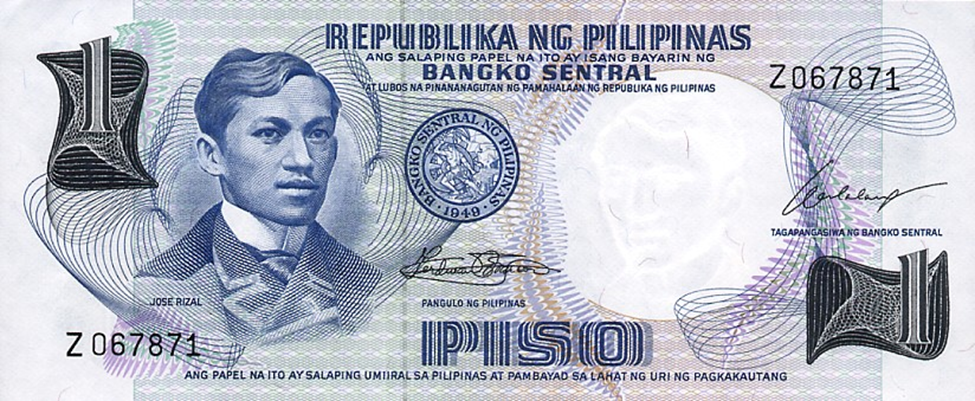
Furthermore, Rizal’s name and portrait can be found on some forms of Philippine currency. As the country's national hero, he is deliberately placed on smaller bills and coins because they are the most widely distributed and circulated currency. Since then and until now, printing and engraving his name and image ensures his legacy is carried in the hands of all Filipinos every day.

National and Global Recognition
Without a doubt, this man is the most well-known Filipino of all time. Aside from being one of the brightest minds our nation has ever produced, his name is one of the most popular in our history. Many places in the country and the world were named after him. And his famous name has been mentioned or cited from countless literature and documents and used in various artistic forms.
Recognized for his iconic name— José Rizal—he is revered as the national hero for his intellectual contribution to the Philippine revolution against Spanish rule. In addition to his being a polymath, novelist, and poet whose works ignited the Philippine independence movement, his distinguished reputation makes him the foremost historical figure of our motherland. For there’s only one man who was brave enough to criticize a Western superpower and smart enough to think of revolutionary ideals that influenced many revolutionary leaders and thus completely changed our history. In all these recognitions, he is widely considered not only the most famous but also the most influential Filipino of all ages.
It is impossible to provide an exact, total count of how many times the name "Jose Rizal" is written in history, as it appears in countless official documents, letters, literature, textbooks, and news articles across the globe. However, his name is inarguably the most frequently mentioned name in Philippine history, appearing in thousands of documents from the Spanish colonial period and millions of publications since. This excludes the number of times he and his literary works were made the subject of paintings, sculptures, theatrical plays, and historical films such as Marilou Diaz-Abaya’s film Jose Rizal, released in 1998, and historical drama series for television, e.g., GMA Entertainment Group’s Maria Clara at Ibarra, broadcast by GMA Network in 2022.
Jose Rizal’s Popularity in the 21st Century
Jose Rizal remains celebrated in the modern Philippines because his ideals transcend time, championing universal values like education, critical thinking, and peaceful reform. In fact, according to a survey conducted by Social Weather Stations (SWS), 1,200 respondents who were asked to name five true Filipino heroes chose Dr. Jose Rizal as the most identified Filipino hero. His achievements and contributions are actively kept alive through mandatory educational curricula (e.g., the Rizal Law in schools) and during regular national holidays when his life and death are commemorated by the entire nation. Even in this era of the internet and social media, his enduring relevance is still felt, stemming from several key aspects of his legacy.
On the negative aspect, Jose Rizal is becoming a distant figure for a number of young generations of Filipinos. Though he is still respected and recognized as a hero in this modern age, many find it hard to relate to his “immaculate” image. Most of them, especially the students, remember him only during national holidays such as National Heroes Day and Rizal Day. Sadly, they only engage with his two greatest literary works, Noli Me Tangere and El Filibusterismo, just to pass exams and as compliance with compulsory high school classes. This seeming indifference to Jose Rizal needs to be addressed by the Department of Education and the rest of the government.
Pessimism aside, Rizal has always been a shining beacon amidst any incidents of socio-economic and political turmoil. In the age of misinformation and hostility towards higher education and expert knowledge, his emphasis on intellectual empowerment deeply resonates with today's generations who hold progressive views and active social awareness. In the middle of economic crisis, social inequality, and corruption and scandals in the government, his writings can be reviewed for his reflection on “social cancer”, a metaphor for the deeply rooted social injustices, moral decay, and perversion in the government that plagued Philippine society under Spanish colonial rule. And his philosophies and ideals that centered on education, nationalism, and peaceful reform provide an eternal blueprint for addressing modern issues on educational crises, historical revisionism, globalization, sovereignty, and even maritime and territorial disputes in the West Philippine Sea.

By constantly reminding our youth of his noble act of defending the Filipinos against the foreign invaders and his ultimate sacrifice by dying for the sake of our people, his martyrdom will never be forgotten. By empowering the Filipinos with knowledge, critical thinking, and strong moral character, his belief that education is the ultimate key to freedom and national progress will not die in vain. Indisputably, his genuine love for the country is an incontrovertible fact, which rightfully bestows upon him the recognition as the universal symbol of patriotism. By his unequalled achievements and incomparable contributions, it is both a manifestation and a prayer that his name, Jose Rizal, will never be erased in the collective consciousness of our children who will soon become the future leaders of our nation.
References:
1. University of the Philippines Diliman. My Last Farewell by Jose Rizal (Translated by J. Collas). repository.mainlib.upd.edu.ph.
2. Department of Education, Region 1 (2022, July 27). Jose Rizal, National Hero of the Philippines. depedro1.com.
3. Lean Liwanag (2026, May 8). José Rizal’s Full Name: What It Reveals About His Identity and Heritage. joserizal.com.
4. Timothy Walker. Updated Rizal museum opens on 154th anniversary of hero’s birth. plnmedia.com.
5. Eirene Grace Z. Arcayos (2022, February 24). DOST-PCAARRD COMMEMORATES JOSE RIZAL AS A NATURALIST THROUGH SCIENTIFIC CONFERENCE. www.pcaarrd.dost.gov.ph.
6. GMA News (2011, April 9). Rizal, Bonifacio, Ninoy, Cory, Mabini top survey of heroes. gmanetwork.com.


Comments