
AIMS First-Year Students Set Sail into Philippine Maritime Heritage
- museomaritimo

- Sep 29, 2025
- 4 min read
Updated: Sep 30, 2025

September 29, 2025 – Pasay City, NCR, Philippines
Article by AIMS Museo Maritimo Personnel
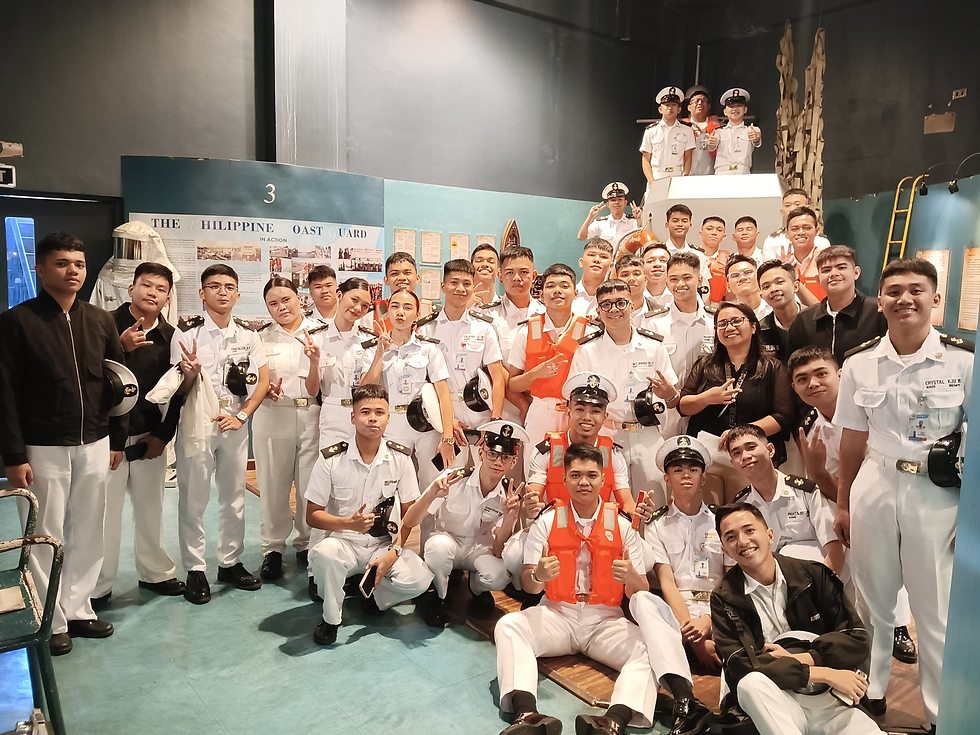
Over 800 first-year AIMS students, spanning 26 sections, have stepped into the heart of the Philippines' maritime history with the annual NSTP Museo Maritimo Tour, a much-awaited educational journey that began on September 12 and wrapped up on September 27, 2025. The immersive tour, organized by AIMS Museo Maritimo and CSFD, marks a pivotal moment for new students as they embark on a deeper understanding of the rich heritage and global significance of the country’s maritime culture.
A Glimpse into Our Seafaring Past
The AIMS Museo Maritimo Tour is a powerful experience that connects AIMS students with the enduring legacy of Filipino seafarers. For over a thousand years, the Philippines has been at the crossroads of trade, exploration, and maritime innovation. The museum, located on campus, serves as a living repository of the country’s centuries-old relationship with the seas.
As students walked through the museum's exhibits, they were met with relics of ancient Filipino boats, maritime tools, and stories of heroic Filipino sailors who navigated treacherous waters, built ships, and transported goods across vast oceans. From the balangay, the ancient wooden boat that carried early Filipinos, to the modern ships that power international trade today, the museum offers a visual and tactile connection to the past. But it doesn’t just dwell in history—it points to the future, giving AIMS students a glimpse of the legacy they are set to continue.
Philippine Maritime Industry: A Global Force
The tour was designed to instill a sense of pride and responsibility in the future maritime professionals of the Philippines. Today, the Philippines is not only one of the largest exporters of seafarers—about 1 in 4 of the world's maritime workers are Filipino—but it is also ranked among the top five shipbuilding nations globally.
For AIMS students, this statistic was eye-opening. Standing in front of ancient navigation tools, the historical accounts of Filipino seafarers’ exploits, and the modern achievements in shipbuilding, students began to see themselves not just as part of an academic institution, but as the next generation of maritime leaders, continuing the tradition of Filipino sailors whose influence stretches across the world.
A Legacy of Resilience and Responsibility
As AIMS students walked through the museum’s diverse exhibits, they also began to understand the magnitude of their future roles. The Philippines is a global leader in maritime transportation, but this comes with immense responsibility. Filipino seafarers are known for their dedication, expertise, and resilience. These qualities are embedded in the fabric of the country’s maritime industry, and they are qualities that AIMS students are expected to carry forward.
The Museo Maritimo highlights this resilience through stories of Filipino seafarers overcoming challenges—be it braving storms at sea, navigating uncharted waters, or adapting to technological innovations. Students were reminded that their education at AIMS is not just about mastering the technicalities of shipbuilding, navigation, or marine safety; it’s also about embodying the values of professionalism, discipline, and perseverance that define the Filipino maritime spirit.
Connecting the Past to the Future
The museum tour was not only a chance for students to reflect on the past, but also a call to action. With global trade increasingly relying on maritime transport, and the world’s oceans facing new environmental challenges, Filipino seafarers continue to play a crucial role in shaping the future of the industry. Through the tour, students were encouraged to view themselves as part of this ongoing story—a story that is as relevant today as it was when the first Filipino navigators set sail.
“The history here is not just something to look at,” said one BSMT student. “It’s a reminder that we are all part of something much bigger. The work we’re going to do in the maritime industry will have a lasting impact on the world. We’re continuing the legacy of our ancestors.”
Honoring a Thousand-Year Tradition
As the tour came to a close, it was clear that the AIMS students were not only captivated by the museum’s exhibits, but also moved by the stories they heard. The Philippine maritime industry is not just about ships and cargo—it is about the people, the families, and the communities who have built and sustained this legacy for generations.
The AIMS Museo Maritimo tour serves as an essential reminder that the maritime profession is a noble calling, one that requires dedication, expertise, and a deep respect for the past. For these young students, it was a humbling experience to see themselves as the inheritors of this incredible tradition.
Looking Ahead: A Future on the Horizon
As the last group of students departed the museum on September 27, there was a palpable sense of excitement. For many, the tour had opened their eyes to the incredible responsibilities and opportunities that lay ahead. The journey from the museum's walls to the open sea may take years, but it is a journey that is now deeply rooted in a profound appreciation for the Filipino maritime legacy.
As they begin their studies, AIMS students are reminded that they are not simply learning to navigate the seas—they are continuing a millennium-old tradition of excellence, resilience, and innovation. The Philippine maritime legacy is alive and well, and its future is in good hands.
Photo Highlights


Comments